
Vérification de la limite d’âge de ce jeu…
À propos du jeu
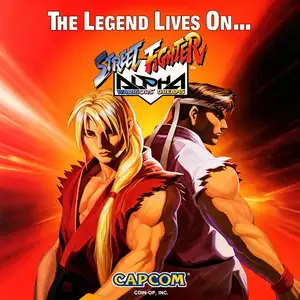
Street Fighter Alpha: Warriors' Dreams (known as Street Fighter Zero in Japan, also called Street Fighter Alpha 1) is an arcade fighting game released by Capcom in 1995 using the CPS2 arcade board. Set chronologically between the original Street Fighter and Street Fighter II, it serves as a prequel entry for the franchise. Playable fighters include returning characters Ryu, Ken, Chun-Li, Guile and Sagat, alongside new additions Adon, Charlie Nash, Rose and Dan. Akuma is available as an unlockable secret character. It introduced brand-new mechanics: Alpha Counter, air blocking and Custom Combo system. The visual art adopts a fresh hand-drawn cartoon style with softer character line art, different from the sharp aesthetics of Street Fighter II. The super gauge system is central to gameplay. Players fill the gauge to unleash Super Combos or activate Custom Combo free combo sequences. As the first title of the Street Fighter Alpha trilogy, the game redesigned character portraits and expanded the franchise backstory. It was later ported to PS, Saturn and PC platforms. Being the starting point of the Alpha series, it remains popular among retro fighting game enthusiasts.
- Année de sortie
- 1995
- Développeur
- Joueurs
- 2 joueurs
- Langues prises en charge
- English
FAQ
- Comment jouer à Street Fighter Alpha: Warriors' Dreams ?
- Vous pouvez jouer à Street Fighter Alpha: Warriors' Dreams en ligne et gratuitement directement dans votre navigateur sur 8BitGo. Aucun téléchargement ni installation d'émulateur n'est nécessaire.
- Sur quelle plateforme est Street Fighter Alpha: Warriors' Dreams ?
- 8BitGo classe cette version dans la catégorie Arcade. Cela décrit son mode d'exécution ici et peut différer de la plateforme de sortie d'origine. Vous pouvez jouer directement dans le navigateur.
- Puis-je sauvegarder ma progression dans Street Fighter Alpha: Warriors' Dreams ?
- La sauvegarde dépend du mode d'exécution du jeu. Les sauvegardes rapides et cloud ne sont disponibles que si la barre du lecteur affiche une commande de sauvegarde ; sinon, utilisez la sauvegarde intégrée au jeu.
- Street Fighter Alpha: Warriors' Dreams fonctionne-t-il sur mobile ?
- Cela dépend du jeu. Consultez les commandes sur cette page : les jeux avec boutons à l'écran fonctionnent au tactile, tandis que les jeux au clavier et à la souris sont mieux adaptés à un ordinateur.
Commandes
Voici les touches par défaut. Chaque carte d’arcade a un nombre de boutons différent et leur donne un sens différent. Les lignes ci-dessus sont les boutons 1 à 6 de la carte : sur Neo Geo (The King of Fighters et compagnie) A/B/C/D sont les boutons 1 à 4, Metal Slug n’utilise que 1, 2 et 4 (tir / saut / grenade), et Pac-Man n’en utilise aucun. Les jeux de combat à six boutons (trois poings, trois pieds — Street Fighter II par exemple) reçoivent une autre disposition du cœur : poing faible U, poing moyen I, poing fort Q, pied faible J, pied moyen K, pied fort E. Cliquez sur l’icône de manette 🎮 dans la barre du lecteur, puis sur « Redéfinir les touches » pour ouvrir les réglages de commandes de l’émulateur (clavier et manette, enregistrés automatiquement). Les manettes sont détectées automatiquement. Sur téléphone, des boutons virtuels s’affichent.
Croix directionnelle
W S A D
Bouton 1
J
Bouton 2
K
Bouton 3
U
Bouton 4
I
Bouton 5
E
Bouton 6
Q
Insérer une pièce
V
Start
Enter
Sauvegarde rapide
F2
Chargement rapide
F4
Tu aimeras peut-être aussi
Même plateforme, même genre, ou même développeur
Cadillacs and Dinosaurs
 ARCADE
JoJo's Bizarre Adventure: Heritage for the Future
 ARCADE
Warriors of Fate
 ARCADE
Marvel Super Heroes vs Street Fighter
 ARCADE
Street Fighter Alpha 3
.webp) ARCADE
ARCADESuper Street Fighter II Turbo
 GBA
GBAPhoenix Wright: Ace Attorney
 ARCADE