
Vérification de la limite d’âge de ce jeu…
À propos du jeu
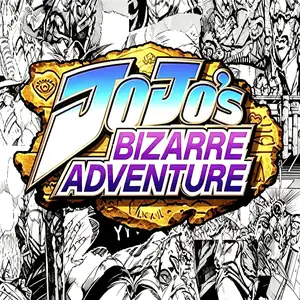
JoJo's Bizarre Adventure: Heritage for the Future (Japanese: ジョジョの奇妙な冒険 未来への遺産) is a landmark 2D arcade fighting game developed by Capcom. The initial arcade build *JoJo’s Venture* launched in 1998, with the enhanced expanded edition *Heritage for the Future* arriving in 1999 as the final official title for the CPS‑3 arcade hardware. It adapts Hirohiko Araki’s manga Part 3: Stardust Crusaders. It features the innovative Stand‑system combat mechanic. A dedicated stand button summons or retracts each character’s supernatural Stand. Players can perform separate attacks with body and Stand, build elaborate combos, and trigger stand‑assisted recovery. Stands have their own stamina gauge; once broken, the character suffers vulnerability. The playable cast includes Jotaro Kujo, Noriaki Kakyoin, Polnareff, Joseph Joestar, DIO and many more. Heritage for the Future adds multiple new and secret playable fighters such as Pet Shop, Mariah, Hol Horse and Vanilla Ice. The visual style faithfully reproduces Araki’s distinct manga aesthetic, with striking sprite animations and comic‑panel‑style special‑move cut‑ins. Controls use light‑medium‑heavy attack buttons plus a dedicated stand key. It supports arcade mode, challenge mode and two‑player versus battles. Ports were released for PlayStation and Dreamcast, later followed by an HD digital re‑release. Original arcade ROM files can be played via MAME emulators, and it retains a strong cult following within the fighting‑game community.
- Année de sortie
- 1998
- Développeur
- Joueurs
- 1 joueur
- Langues prises en charge
- English · 日本語
FAQ
- Comment jouer à JoJo's Bizarre Adventure: Heritage for the Future ?
- Vous pouvez jouer à JoJo's Bizarre Adventure: Heritage for the Future en ligne et gratuitement directement dans votre navigateur sur 8BitGo. Aucun téléchargement ni installation d'émulateur n'est nécessaire.
- Sur quelle plateforme est JoJo's Bizarre Adventure: Heritage for the Future ?
- 8BitGo classe cette version dans la catégorie Arcade. Cela décrit son mode d'exécution ici et peut différer de la plateforme de sortie d'origine. Vous pouvez jouer directement dans le navigateur.
- Puis-je sauvegarder ma progression dans JoJo's Bizarre Adventure: Heritage for the Future ?
- La sauvegarde dépend du mode d'exécution du jeu. Les sauvegardes rapides et cloud ne sont disponibles que si la barre du lecteur affiche une commande de sauvegarde ; sinon, utilisez la sauvegarde intégrée au jeu.
- JoJo's Bizarre Adventure: Heritage for the Future fonctionne-t-il sur mobile ?
- Cela dépend du jeu. Consultez les commandes sur cette page : les jeux avec boutons à l'écran fonctionnent au tactile, tandis que les jeux au clavier et à la souris sont mieux adaptés à un ordinateur.
Commandes
Voici les touches par défaut. Chaque carte d’arcade a un nombre de boutons différent et leur donne un sens différent. Les lignes ci-dessus sont les boutons 1 à 6 de la carte : sur Neo Geo (The King of Fighters et compagnie) A/B/C/D sont les boutons 1 à 4, Metal Slug n’utilise que 1, 2 et 4 (tir / saut / grenade), et Pac-Man n’en utilise aucun. Les jeux de combat à six boutons (trois poings, trois pieds — Street Fighter II par exemple) reçoivent une autre disposition du cœur : poing faible U, poing moyen I, poing fort Q, pied faible J, pied moyen K, pied fort E. Cliquez sur l’icône de manette 🎮 dans la barre du lecteur, puis sur « Redéfinir les touches » pour ouvrir les réglages de commandes de l’émulateur (clavier et manette, enregistrés automatiquement). Les manettes sont détectées automatiquement. Sur téléphone, des boutons virtuels s’affichent.
Croix directionnelle
W S A D
Bouton 1
J
Bouton 2
K
Bouton 3
U
Bouton 4
I
Bouton 5
E
Bouton 6
Q
Insérer une pièce
V
Start
Enter
Sauvegarde rapide
F2
Chargement rapide
F4
Tu aimeras peut-être aussi
Même plateforme, même genre, ou même développeur
Cadillacs and Dinosaurs
 ARCADE
Warriors of Fate
 ARCADE
Marvel Super Heroes vs Street Fighter
 ARCADE
Street Fighter Alpha 3
.webp) ARCADE
ARCADESuper Street Fighter II Turbo
 GBA
GBAPhoenix Wright: Ace Attorney
 ARCADE
Street Fighter
 GB
GB