
Checking this game’s age requirement…
About this game
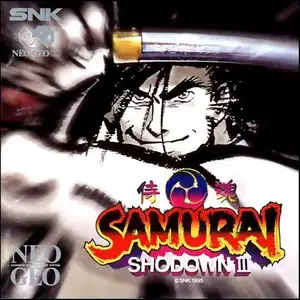
Samurai Shodown III: Blades of Blood (Japanese: Samurai Spirits Zankuro Musouken) is a weapon-based fighting game developed by SNK, released for Neo Geo MVS arcade hardware on November 15, 1995. Its timeline takes place between the first Samurai Shodown and Samurai Shodown II. The demon swordsman Minazuki Zankuro roams the land and slaughters countless warriors. The amnesiac boy Shizumaru Hisame, the new protagonist of this installment, joins other swordsmen to hunt down Zankuro. Its landmark new feature is the **Shura / Rasetsu sword alignment system**. Every character has two move sets. Shura excels in aerial combat while Rasetsu focuses on ground fighting. With only 12 selectable fighters, the dual styles effectively create 24 unique fighting profiles. Players also pick one of three combat ranks at the start: Kenshi (Swordsman) with limited auto-guard but slower rage gain; Kengo (Master Swordsman), the balanced default mode; Kensei (Sword Saint) with permanently maxed rage but **no ability to block**, for advanced players. The combat system is heavily revised. Rolls are removed and replaced with quick evasive sidesteps and back-turning attacks. New mechanics include parry counters, guard breakers and weapon-knockoff specials. The classic Rage Gauge remains; players can build rage by taking hits or manually charging it. At full rage, attack power surges. The roster shrinks to 12 characters. New fighters include Shizumaru, Rimururu, Basara, Gaira and final boss Zankuro. Returning veterans such as Haohmaru, Nakoruru, Hanzo Hattori and Ukyo Tachibana get fully redrawn animations and new moves. The art shifts to atmospheric ink-wash visuals paired with somber, ethereal soundtrack. Matches follow best-of-three rules, with random meat for HP recovery and bombs falling into the battlefield. This title drastically reworked the franchise formula and received mixed reception. It was less popular in Chinese arcades than Samurai Shodown II, but its dual-alignment and three-rank systems laid an important foundation for later entries, making it a pivotal experimental chapter in the Samurai Shodown saga.
- Release year
- 1990
- Developer
- Players
- 2 players
- Supported languages
- English
FAQ
- How can I play Samurai Shodown III: Blades of Blood?
- You can play Samurai Shodown III: Blades of Blood online for free right in your browser on 8BitGo. No download or emulator installation is required.
- What platform is Samurai Shodown III: Blades of Blood?
- 8BitGo classifies this version as Arcade. That describes how it runs here and may differ from the game's original release platform. You can play it directly in the browser.
- Can I save my progress in Samurai Shodown III: Blades of Blood?
- Save support depends on how this game runs. Quick saves and cloud saves are available only when the player toolbar shows a save control; otherwise use the game's own save feature.
- Does Samurai Shodown III: Blades of Blood work on mobile?
- It depends on the game. Check the controls on this page: games with on-screen buttons work on touch devices, while keyboard-and-mouse games are best played on desktop.
Controls
These are the default keys. Every arcade board has a different number of buttons and means different things by them. The rows above are buttons 1–6 on the board: on Neo Geo boards (The King of Fighters and friends) A/B/C/D are buttons 1–4, Metal Slug uses only 1, 2 and 4 (shoot / jump / grenade), and Pac-Man uses none at all. Six-button fighters with three punches and three kicks (Street Fighter II and the like) get a different layout from the core: light punch U, medium punch I, heavy punch Q, light kick J, medium kick K, heavy kick E. Click the gamepad icon 🎮 in the player toolbar, then “Remap keys” to open the emulator’s own control settings (keyboard and gamepad, saved automatically). Gamepads are detected automatically. On phones you get on-screen buttons.
D-Pad
W S A D
Button 1
J
Button 2
K
Button 3
U
Button 4
I
Button 5
E
Button 6
Q
Insert coin
V
Start
Enter
Quick save
F2
Quick load
F4
You might also like
Same platform, same genre, or from the same developer
 DOS
DOSAge of Empires
 NES
NESSuper Mario Bros.3
 NDS
NDSPlants vs. Zombies
 NES
NESCircus Charlie
 NES
NESGomoku Narabe Renju
 NDS
NDSGrand Theft Auto: Chinatown Wars
 GBA
GBAThe King of Fighters EX: Neo Blood
 ARCADE