
Verifica del requisito di età del gioco…
Informazioni sul gioco
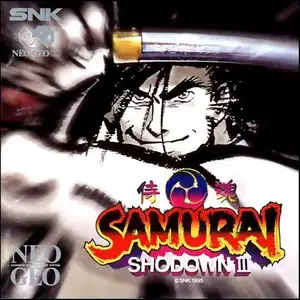
Samurai Shodown III: Blades of Blood (Japanese: Samurai Spirits Zankuro Musouken) is a weapon-based fighting game developed by SNK, released for Neo Geo MVS arcade hardware on November 15, 1995. Its timeline takes place between the first Samurai Shodown and Samurai Shodown II. The demon swordsman Minazuki Zankuro roams the land and slaughters countless warriors. The amnesiac boy Shizumaru Hisame, the new protagonist of this installment, joins other swordsmen to hunt down Zankuro. Its landmark new feature is the **Shura / Rasetsu sword alignment system**. Every character has two move sets. Shura excels in aerial combat while Rasetsu focuses on ground fighting. With only 12 selectable fighters, the dual styles effectively create 24 unique fighting profiles. Players also pick one of three combat ranks at the start: Kenshi (Swordsman) with limited auto-guard but slower rage gain; Kengo (Master Swordsman), the balanced default mode; Kensei (Sword Saint) with permanently maxed rage but **no ability to block**, for advanced players. The combat system is heavily revised. Rolls are removed and replaced with quick evasive sidesteps and back-turning attacks. New mechanics include parry counters, guard breakers and weapon-knockoff specials. The classic Rage Gauge remains; players can build rage by taking hits or manually charging it. At full rage, attack power surges. The roster shrinks to 12 characters. New fighters include Shizumaru, Rimururu, Basara, Gaira and final boss Zankuro. Returning veterans such as Haohmaru, Nakoruru, Hanzo Hattori and Ukyo Tachibana get fully redrawn animations and new moves. The art shifts to atmospheric ink-wash visuals paired with somber, ethereal soundtrack. Matches follow best-of-three rules, with random meat for HP recovery and bombs falling into the battlefield. This title drastically reworked the franchise formula and received mixed reception. It was less popular in Chinese arcades than Samurai Shodown II, but its dual-alignment and three-rank systems laid an important foundation for later entries, making it a pivotal experimental chapter in the Samurai Shodown saga.
- Anno di uscita
- 1990
- Sviluppatore
- Giocatori
- 2 giocatori
- Lingue supportate
- English
Domande frequenti
- Come posso giocare a Samurai Shodown III: Blades of Blood?
- Puoi giocare a Samurai Shodown III: Blades of Blood online e gratuitamente direttamente nel tuo browser su 8BitGo. Non è richiesto alcun download né l'installazione di emulatori.
- Su quale piattaforma è Samurai Shodown III: Blades of Blood?
- 8BitGo classifica questa versione come Arcade. Questo descrive come viene eseguita qui e può differire dalla piattaforma di uscita originale. Puoi giocare direttamente nel browser.
- Posso salvare i miei progressi in Samurai Shodown III: Blades of Blood?
- Il supporto ai salvataggi dipende da come viene eseguito il gioco. Salvataggi rapidi e cloud sono disponibili solo se la barra del player mostra il relativo comando; altrimenti usa il salvataggio interno del gioco.
- Samurai Shodown III: Blades of Blood funziona su mobile?
- Dipende dal gioco. Controlla i comandi in questa pagina: i giochi con pulsanti su schermo funzionano via touch, mentre quelli con tastiera e mouse sono più adatti al computer.
Comandi
Questi sono i tasti predefiniti. Ogni scheda arcade ha un numero di tasti diverso e attribuisce loro significati diversi. Sopra trovi i tasti da 1 a 6 della scheda: sulle Neo Geo (The King of Fighters e affini) A/B/C/D sono i tasti 1–4, Metal Slug usa solo 1, 2 e 4 (sparo / salto / granata) e Pac-Man non ne usa nessuno. I picchiaduro a sei tasti con tre pugni e tre calci (Street Fighter II e simili) ricevono dal core un altro schema: pugno debole U, pugno medio I, pugno forte Q, calcio debole J, calcio medio K, calcio forte E. Fai clic sull’icona del gamepad 🎮 nella barra del player, poi su «Rimappa i tasti» per aprire le impostazioni dei controlli dell’emulatore (tastiera e gamepad, salvate automaticamente). I gamepad vengono rilevati in automatico. Su smartphone compaiono i pulsanti a schermo.
Croce direzionale
W S A D
Tasto 1
J
Tasto 2
K
Tasto 3
U
Tasto 4
I
Tasto 5
E
Tasto 6
Q
Inserisci moneta
V
Start
Enter
Salvataggio rapido
F2
Caricamento rapido
F4
Potrebbe piacerti anche
Stessa piattaforma, stesso genere o stesso sviluppatore
 DOS
DOSAge of Empires
 NES
NESSuper Mario Bros.3
 NDS
NDSPlants vs. Zombies
 NES
NESCircus Charlie
 NES
NESGomoku Narabe Renju
 NDS
NDSGrand Theft Auto: Chinatown Wars
 GBA
GBAThe King of Fighters EX: Neo Blood
 ARCADE