
Comprobando el requisito de edad de este juego…
Sobre este juego
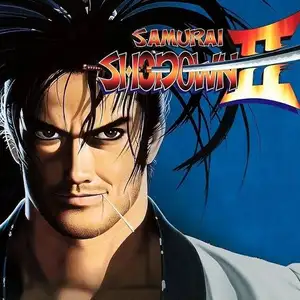
Samurai Shodown II (Japanese title Shin Samurai Spirits: Haohmaru Jigokuhen, known to Chinese players as True Samurai Shodown) is a weapon-based fighting masterpiece developed by SNK and released for Neo Geo MVS arcade hardware in 1994, widely regarded as the peak entry of the Samurai Shodown franchise. After Amakusa Shiro Tokisada’s defeat in the first game, the demon queen Mizuki Rashojin revives and plans to open the gate of the demon realm to destroy the mortal world. Haohmaru, Ukyo Tachibana and other warriors set out to stop Mizuki’s evil scheme. It inherits the signature Rage Gauge system. The gauge fills when taking damage or landing hits. When fully charged, the character turns red with drastically boosted attack power. The landmark new mechanic is the **Weapon Break special move**, usable only at max rage. A successful hit shatters the foe’s weapon, forcing them to fight unarmed with reduced attack and defense. The broken weapon can be picked up again after a short period. Compared with the first game, movement options are greatly expanded with forward roll, back roll, low crouch and low dodge, enriching offensive and defensive tactics. The roster expands to 15 fighters. Four new characters join: Genjuro Kibagami, Cham Cham, Neinhalt Sieger and Nicotine Caffeine. Returning veterans including Haohmaru, Nakoruru, Ukyo Tachibana and Hanzo Hattori receive brand-new moves. Secret commands such as chibi transformation are included. Matches follow best-of-three rules, retaining the blade clash mechanic where players mash buttons to win the weapon lock duel. It features smooth pixel animation, sharp slash visual effects and authentic blade-clashing sound effects, paired with immersive Japanese-style music. Gameplay emphasizes spacing and careful positioning rather than long combos; a single heavy slash can turn the tide of battle. It was immensely popular in Chinese arcades in the 90s and remains a beloved classic for retro fighting game enthusiasts.
- Año de lanzamiento
- 1990
- Desarrolladora
- Jugadores
- 2 jugadores
- Idiomas compatibles
- English
Preguntas frecuentes
- ¿Cómo puedo jugar a Samurai Shodown II?
- Puedes jugar a Samurai Shodown II en línea y gratis directamente en tu navegador en 8BitGo. No necesitas descargar nada ni instalar ningún emulador.
- ¿En qué plataforma es Samurai Shodown II?
- 8BitGo clasifica esta versión como Arcade. Esto describe cómo se ejecuta aquí y puede diferir de la plataforma de lanzamiento original. Puedes jugar directamente en el navegador.
- ¿Puedo guardar mi progreso en Samurai Shodown II?
- La posibilidad de guardar depende de cómo se ejecute el juego. El guardado rápido y en la nube solo está disponible si la barra del reproductor muestra un control de guardado; si no, usa el guardado propio del juego.
- ¿Funciona Samurai Shodown II en el móvil?
- Depende del juego. Consulta los controles de esta página: los juegos con botones en pantalla funcionan con tacto, mientras que los de teclado y ratón se disfrutan mejor en un ordenador.
Controles
Estas son las teclas predeterminadas. Cada placa recreativa tiene un número de botones distinto y les da un sentido distinto. Arriba están los botones 1 a 6 de la placa: en Neo Geo (The King of Fighters y compañía) A/B/C/D son los botones 1 a 4, Metal Slug solo usa 1, 2 y 4 (disparo / salto / granada), y Pac-Man no usa ninguno. Los juegos de lucha de seis botones con tres puños y tres patadas (Street Fighter II, por ejemplo) reciben otra disposición del núcleo: puño flojo U, puño medio I, puño fuerte Q, patada floja J, patada media K, patada fuerte E. Haz clic en el icono de mando 🎮 de la barra del reproductor y luego en «Reasignar teclas» para abrir la configuración de controles del emulador (teclado y mando, se guarda automáticamente). Si conectas un mando, se detecta solo. En el teléfono aparecen botones en pantalla.
Cruceta
W S A D
Botón 1
J
Botón 2
K
Botón 3
U
Botón 4
I
Botón 5
E
Botón 6
Q
Insertar moneda
V
Start
Enter
Guardado rápido
F2
Carga rápida
F4
También te puede gustar
Misma plataforma, mismo género o de la misma desarrolladora
 DOS
DOSAge of Empires
 NES
NESSuper Mario Bros.3
 NDS
NDSPlants vs. Zombies
 NES
NESCircus Charlie
 NES
NESGomoku Narabe Renju
 NDS
NDSGrand Theft Auto: Chinatown Wars
 GBA
GBAThe King of Fighters EX: Neo Blood
 ARCADE