
Comprobando el requisito de edad de este juego…
Sobre este juego
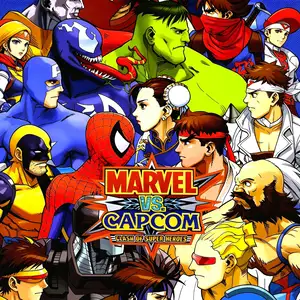
Marvel vs. Capcom: Clash of Super Heroes (MvC) es un juego de lucha de parejas desarrollado por Capcom, lanzado para el hardware de arcade CPS2 en 1998. Es el tercer título principal de la franquicia Marvel vs Capcom, después de Marvel Super Heroes vs Street Fighter. El villano Onslaught desata un poder psíquico abrumador para destruir el mundo. Héroes de los universos Marvel y Capcom unen fuerzas para detener la catástrofe. Mantiene el estilo de juego de combo aéreo rápido característico de la franquicia con diseño de seis botones, combos de super salto, air dash y air. Llena el super medidor para dar rienda suelta a devastadores Hyper Combos. Su núcleo * * Sistema de asistencia de socio especial * *: eliges un luchador principal más un compañero de apoyo aleatorio. Invoca al compañero para ayudar a los ataques en medio de la pelea. A diferencia de las entradas anteriores, no puedes cambiar libremente entre dos luchadores principales. El nuevo Duo Team Attack consume un medidor para llevar brevemente a ambos personajes a la pantalla a la vez para una presión ofensiva combinada. La lista jugable reúne a héroes estelares de Marvel y Capcom. Lado de Marvel: Spider-Man, Wolverine, Capitán América, Hulk, Venom, Gambit, War Machine. Lado de Capcom: Ryu, Chun-Li, Zangief, Morrigan, Mega Man, Capitán Comando, Strider Hiryu y Jin Saotome. Los personajes secretos ocultos incluyen Gold War Machine, Hyper Venom, Orange Hulk, Roll, Shadow Lady y Lilith Morrigan. Onslaught sirve como jefe final de arcade. Los partidos siguen las mejores de tres reglas, con historia de arcade y modos multijugador versus. Cuenta con un vibrante pixel art de estilo cómico y una enérgica banda sonora. Más tarde se trasladó a PlayStation y Sega Dreamcast. La versión de Dreamcast es un puerto fiel de alta calidad, mientras que el lanzamiento de PS1 cortó varias funciones de asistencia. Fue popular en las salas de juegos chinas. El combate aéreo rápido y las combinaciones de asistencia brindan partidos espectaculares. Este luchador cruzado CPS2 de la última era sentó las bases importantes para Marvel vs Capcom 2.
- Año de lanzamiento
- 1990
- Desarrolladora
- Jugadores
- 1 jugador
- Idiomas compatibles
- English
Preguntas frecuentes
- ¿Cómo puedo jugar a Marvel vs. Capcom: Clash of Super Heroes?
- Puedes jugar a Marvel vs. Capcom: Clash of Super Heroes en línea y gratis directamente en tu navegador en 8BitGo. No necesitas descargar nada ni instalar ningún emulador.
- ¿En qué plataforma es Marvel vs. Capcom: Clash of Super Heroes?
- 8BitGo clasifica esta versión como Arcade. Esto describe cómo se ejecuta aquí y puede diferir de la plataforma de lanzamiento original. Puedes jugar directamente en el navegador.
- ¿Puedo guardar mi progreso en Marvel vs. Capcom: Clash of Super Heroes?
- La posibilidad de guardar depende de cómo se ejecute el juego. El guardado rápido y en la nube solo está disponible si la barra del reproductor muestra un control de guardado; si no, usa el guardado propio del juego.
- ¿Funciona Marvel vs. Capcom: Clash of Super Heroes en el móvil?
- Depende del juego. Consulta los controles de esta página: los juegos con botones en pantalla funcionan con tacto, mientras que los de teclado y ratón se disfrutan mejor en un ordenador.
Controles
Estas son las teclas predeterminadas. Cada placa recreativa tiene un número de botones distinto y les da un sentido distinto. Arriba están los botones 1 a 6 de la placa: en Neo Geo (The King of Fighters y compañía) A/B/C/D son los botones 1 a 4, Metal Slug solo usa 1, 2 y 4 (disparo / salto / granada), y Pac-Man no usa ninguno. Los juegos de lucha de seis botones con tres puños y tres patadas (Street Fighter II, por ejemplo) reciben otra disposición del núcleo: puño flojo U, puño medio I, puño fuerte Q, patada floja J, patada media K, patada fuerte E. Haz clic en el icono de mando 🎮 de la barra del reproductor y luego en «Reasignar teclas» para abrir la configuración de controles del emulador (teclado y mando, se guarda automáticamente). Si conectas un mando, se detecta solo. En el teléfono aparecen botones en pantalla.
Cruceta
W S A D
Botón 1
J
Botón 2
K
Botón 3
U
Botón 4
I
Botón 5
E
Botón 6
Q
Insertar moneda
V
Start
Enter
Guardado rápido
F2
Carga rápida
F4
También te puede gustar
Misma plataforma, mismo género o de la misma desarrolladora
 DOS
DOSAge of Empires
 NES
NESSuper Mario Bros.3
 NDS
NDSPlants vs. Zombies
 NES
NESCircus Charlie
 NES
NESGomoku Narabe Renju
 NDS
NDSGrand Theft Auto: Chinatown Wars
 GBA
GBAThe King of Fighters EX: Neo Blood
 ARCADE