
Vérification de la limite d’âge de ce jeu…
À propos du jeu
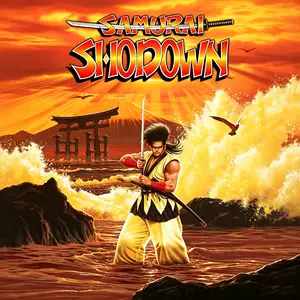
Samurai Shodown (Japanese name Samurai Spirits, サムライスピリッツ) is a weapon-based fighting game developed by SNK, released for Neo Geo MVS arcade hardware in July 1993. It is the pioneering sword-fighting fighter, carving out a distinct samurai combat style amid the Street Fighter II fighting game boom. Set in Edo-era Japan, plague and wars ravage the land. Tokisada Amakusa, executed by the shogunate, resurrects with dark powers to bring ruin to the world. Twelve warriors, ninjas and shamans from across the country set out to defeat Amakusa and end the disaster. The gameplay emphasizes spacing, patience and decisive single strikes rather than long combo strings. Heavy slashes deal massive damage and can cut away a huge portion of an opponent’s health. Its iconic **Rage Gauge** fills when taking hits. Once full, the character turns red and attack power surges dramatically, creating strong comeback opportunities. Blade clashing activates weapon lock; mash buttons to overpower your foe and knock their sword away. Swords have durability and can break after repeated clashes. Disarmed fighters are weakened, and players can perform the advanced bare-handed sword catch counter technique. Matches follow best-of-three rules. During fights, the background referee Kuroko occasionally tosses meat for health recovery or bombs onto the battlefield. The roster features iconic fighters: Haohmaru, Nakoruru, Ukyo Tachibana, Galford and Wang Hu, each with unique weapons and move sets. It features gritty pixel art and traditional Japanese soundtrack. It was extremely popular in Chinese arcades and established the blueprint for weapon-based fighting games, inspiring many later sword combat titles.
- Année de sortie
- 1990
- Développeur
- Joueurs
- 2 joueurs
- Langues prises en charge
- English
FAQ
- Comment jouer à Samurai Shodown ?
- Vous pouvez jouer à Samurai Shodown en ligne et gratuitement directement dans votre navigateur sur 8BitGo. Aucun téléchargement ni installation d'émulateur n'est nécessaire.
- Sur quelle plateforme est Samurai Shodown ?
- 8BitGo classe cette version dans la catégorie Arcade. Cela décrit son mode d'exécution ici et peut différer de la plateforme de sortie d'origine. Vous pouvez jouer directement dans le navigateur.
- Puis-je sauvegarder ma progression dans Samurai Shodown ?
- La sauvegarde dépend du mode d'exécution du jeu. Les sauvegardes rapides et cloud ne sont disponibles que si la barre du lecteur affiche une commande de sauvegarde ; sinon, utilisez la sauvegarde intégrée au jeu.
- Samurai Shodown fonctionne-t-il sur mobile ?
- Cela dépend du jeu. Consultez les commandes sur cette page : les jeux avec boutons à l'écran fonctionnent au tactile, tandis que les jeux au clavier et à la souris sont mieux adaptés à un ordinateur.
Commandes
Voici les touches par défaut. Chaque carte d’arcade a un nombre de boutons différent et leur donne un sens différent. Les lignes ci-dessus sont les boutons 1 à 6 de la carte : sur Neo Geo (The King of Fighters et compagnie) A/B/C/D sont les boutons 1 à 4, Metal Slug n’utilise que 1, 2 et 4 (tir / saut / grenade), et Pac-Man n’en utilise aucun. Les jeux de combat à six boutons (trois poings, trois pieds — Street Fighter II par exemple) reçoivent une autre disposition du cœur : poing faible U, poing moyen I, poing fort Q, pied faible J, pied moyen K, pied fort E. Cliquez sur l’icône de manette 🎮 dans la barre du lecteur, puis sur « Redéfinir les touches » pour ouvrir les réglages de commandes de l’émulateur (clavier et manette, enregistrés automatiquement). Les manettes sont détectées automatiquement. Sur téléphone, des boutons virtuels s’affichent.
Croix directionnelle
W S A D
Bouton 1
J
Bouton 2
K
Bouton 3
U
Bouton 4
I
Bouton 5
E
Bouton 6
Q
Insérer une pièce
V
Start
Enter
Sauvegarde rapide
F2
Chargement rapide
F4
Tu aimeras peut-être aussi
Même plateforme, même genre, ou même développeur
 DOS
DOSAge of Empires
 NES
NESSuper Mario Bros.3
 NDS
NDSPlants vs. Zombies
 NES
NESCircus Charlie
 NES
NESGomoku Narabe Renju
 NDS
NDSGrand Theft Auto: Chinatown Wars
 GBA
GBAThe King of Fighters EX: Neo Blood
 ARCADE