
Vérification de la limite d’âge de ce jeu…
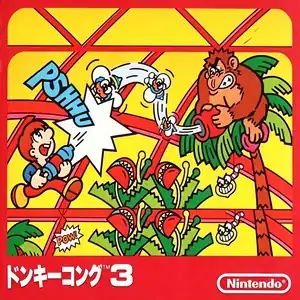
Donkey Kong 3
À propos du jeu
Donkey Kong 3 (Japanese: ドンキーコング 3) is developed by Nintendo R&D1 and Intelligent Systems, released for Famicom in 1984, ported from the 1983 arcade original. It concludes the original Donkey Kong trilogy on Famicom. It abandons the platform jumping gameplay of the first two games and becomes a fixed-screen shooter defense game. Mario does not appear in this title. Donkey Kong breaks into Stanley the Bugman’s greenhouse and stirs up beehives to unleash swarms of pests, aiming to destroy Stanley’s precious flowers. Players control Stanley armed with bug spray. The goal is to protect five flowers, and spray Donkey Kong hanging from vines to push him upward and off the screen. There are two ways to clear a stage: force Donkey Kong out of the screen by spraying, or eliminate all insects. Enemies include bees, creepies, vine-eaters and butterflies. Bees try to steal flowers; vine-eaters can chew through vines and cause Donkey Kong to drop down and crush Stanley. Touching bugs or bee stings costs a life. There are three greenhouse themed stages (blue, gray, brown). After clearing all three, the game loops with increasing difficulty. The bug spray has limited range. Collect power-ups to get enhanced yellow spray with stronger attack power. It supports two-player turn-based gameplay and two difficulty modes. Its soundtrack uses the famous Flight of the Bumblebee with fast-paced rhythm. Due to the drastic gameplay shift compared with earlier Donkey Kong games, it received mixed reviews. Included on many Subor multicarts in China, it is a highly unique experimental classic from Nintendo on Famicom.
- Année de sortie
- 1990
- Développeur
- Joueurs
- 1 joueur
- Langues prises en charge
- 简体中文 · English · Español
FAQ
- Comment jouer à Donkey Kong 3 ?
- Vous pouvez jouer à Donkey Kong 3 en ligne et gratuitement directement dans votre navigateur sur 8BitGo. Aucun téléchargement ni installation d'émulateur n'est nécessaire.
- Sur quelle plateforme est Donkey Kong 3 ?
- 8BitGo classe cette version dans la catégorie NES (Famicom). Cela décrit son mode d'exécution ici et peut différer de la plateforme de sortie d'origine. Vous pouvez jouer directement dans le navigateur.
- Puis-je sauvegarder ma progression dans Donkey Kong 3 ?
- La sauvegarde dépend du mode d'exécution du jeu. Les sauvegardes rapides et cloud ne sont disponibles que si la barre du lecteur affiche une commande de sauvegarde ; sinon, utilisez la sauvegarde intégrée au jeu.
- Donkey Kong 3 fonctionne-t-il sur mobile ?
- Cela dépend du jeu. Consultez les commandes sur cette page : les jeux avec boutons à l'écran fonctionnent au tactile, tandis que les jeux au clavier et à la souris sont mieux adaptés à un ordinateur.
Commandes
Voici les touches par défaut. Cliquez sur l’icône de manette 🎮 dans la barre du lecteur, puis sur « Redéfinir les touches » pour ouvrir les réglages de commandes de l’émulateur (clavier et manette, enregistrés automatiquement). Les manettes sont détectées automatiquement. Sur téléphone, des boutons virtuels s’affichent.
Croix directionnelle
W S A D
A
K
B
J
Start
Enter
Select
Shift
Sauvegarde rapide
F2
Chargement rapide
F4
Tu aimeras peut-être aussi
Même plateforme, même genre, ou même développeur
 DOS
DOSAge of Empires
 NES
NESSuper Mario Bros.3
 NDS
NDSPlants vs. Zombies
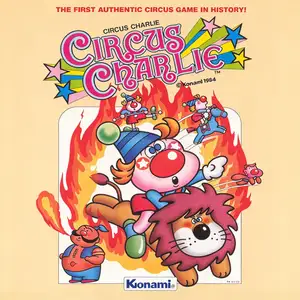 NES
NESCircus Charlie
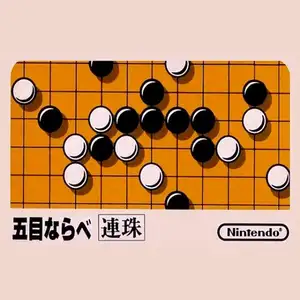 NES
NESGomoku Narabe Renju
 NDS
NDSGrand Theft Auto: Chinatown Wars
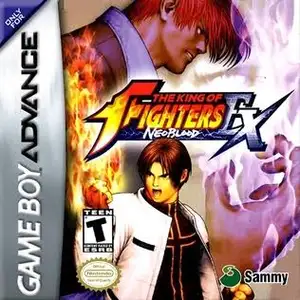 GBA
GBAThe King of Fighters EX: Neo Blood
 ARCADE